Research
With the democratization of information, computing resources, and market access, active investment managers must adapt to a new operational framework. The focus has shifted toward combining information effectively, where the additive value of new signals has become increasingly important.
My current focus is to develop practical, novel methodologies for:
High-Performance Computing (HPC) Infrastructure – Enabling efficient backtesting and additive testing for quantitative strategies.
Mathematical Framework for Multi-Period Portfolio Optimization – Developing an optimization approach that runs on an HPC stack, incorporating quantitative signal additive tests to determine whether a signal functions as an alpha factor for an existing portfolio.
Given my experience as an industry professional and my academic background, I aim to pursue this project as a graduate research initiative, structured as an industrial research setup. The project will emphasize:
- Simplicity
- Interpretability
- Time-bound execution
- Design Thinking Methodology as its foundation.
This approach will ensure that the research remains both academically rigorous and practically applicable to industry challenges.
Publications
Journal Publications
Rahul Rahul, Adam R. Stinchcombe, Jamie W. Joseph, Brian Ingalls (2023). Kinetic modelling of β-cell metabolism reveals control points in the insulin-regulating pyruvate cycling pathways. IET systems biology, 17, 303-315.
Kavita Singh, Awantika Joshi, Nikhil, Srinivasapura Venkateshmurthy, Rahul Rahul, Mark D Huffman, Nikhil Tandon, Dorairaj Prabhakaran (2023). A Delphi Study to Prioritize Evidence-Based Strategies for Cardiovascular Disease Care in India. Global Implementation Research and Applications 2023 3:3, 3, 272-283.
Parimal Samir, Christopher M. Browne, Rahul, Ming Sun, Bingxin Shen, Wen Li, Joachim Frank, Andrew J. Link (2018). Identification of Changing Ribosome Protein Compositions using Mass Spectrometry. PROTEOMICS, 18, 1800217.
Parimal Samir, Rahul, James C. Slaughter, Andrew J. Link (2015). Environmental Interactions and Epistasis Are Revealed in the Proteomic Responses to Complex Stimuli. PLoS ONE, 10(8), e0134099.
Teaching
- Rahul (2012). A Survey of Wiki Based Collaborative Learning Environments for the Interdisciplinary Training of the Students in Maths and Biology. [Poster presentation]. Opportunities and New Directions Conference, Centre of Teaching Excellence, University of Waterloo, Waterloo, Canada
Presentations
- Parimal Samir, Rahul, Andrew Link (2015). Quantitative proteomic analysis reveals environmental interaction and epistasis in the responses to complex stimuli in Saccharomyces cerevisiae. [Paper presentation]. 63rd ASMS Conference on Mass Spectrometry and Allied Topics, St. Louis, Missouri, USA
- Rahul, Adam Stinchcombe, Jamie Joseph, Brian Ingalls (2012). Kinetic Modelling of Pyruvate Recycling Pathways in Pancreatic \(\beta\)-Cells. [Paper presentation]. The 8\(^{\text{th}}\) International Conference on Differential Equations and Dynamical Systems, Waterloo, Canada
- Rahul, Adam Stinchcombe, Jamie Joseph, Brian Ingalls (2011). Dynamic Modelling of Metabolism in Pancreatic \(\beta\)-Cells. [Paper presentation]. The International Conference on Applied Mathematics, Modelling and Computational Science (AMMCS), Waterloo, Canada
Posters
- Rahul, Fanny Dupuy, Sébastien Tabariès, Nicholas Bertos, Daina Z. Avizonis, Morag Park, Peter Siegel, Uri D. Akavia (2014). A computational method to integrate gene expression and metabolomics data to identify metabolic adaptations in cancer. [Poster presentation]. Mechanisms Models of Cancer Conference, Cold Spring Harbor, USA
- Rahul, Brian Ingalls (2013). Optimal parameter estimation of kinetic models using the surrogate-modelling framework. [Poster presentation]. RECOMB/ISCB Conference, Toronto, Canada
- Rahul, Adam Stinchcombe, Jamie Joseph, Brian Ingalls (2012). Dynamic Modelling of Pyruvate Recycling Pathways in Pancreatic \(\beta\)-cells. [Poster presentation]. 13\(^{\text{th}}\) International Conference on System Biology, Toronto, Toronto, Canada
- Rahul, Adam Stinchcombe, Jamie Joseph, Brian Ingalls (2011). Dynamic Modelling of Metabolism in Pancreatic \(\beta\)-Cells. [Poster presentation]. Graduate Student Conference, Waterloo, Canada
- Rahul, Adam Stinchcombe, Jamie Joseph, Brian Ingalls (2009). Dynamic Modelling of Metabolism in Pancreatic \(\beta\)-Cells. [Poster presentation]. Chemical Biophysics Symposium, Toronto, Canada
Previous Research
Co-Expression Network Reconstruction
While working as a sessional instructor, I did a collaborative research on the construction of the co-expression network for the undetermined system. We constructed the model using SPACE method. Next, we validated the model by matching the network with BioGrid database and corroborating the network against the power law structure. Next, we identified the hub proteins using the degree centrality measure, for example RHR2, RPL5 proteins were ranked highest. The entire work is now published and readers can check Parimal et. al. (Samir et al., 2015) and the source codes are available on Sparse Correlation (accessed March 7, 2025).
Post-Doctoral Research Work
The iMAT algorithm restricts the reaction fluxes according to the expression profile of genes, that is enzymes corresponding to high expressed genes will carry more flux compared to low expressed genes
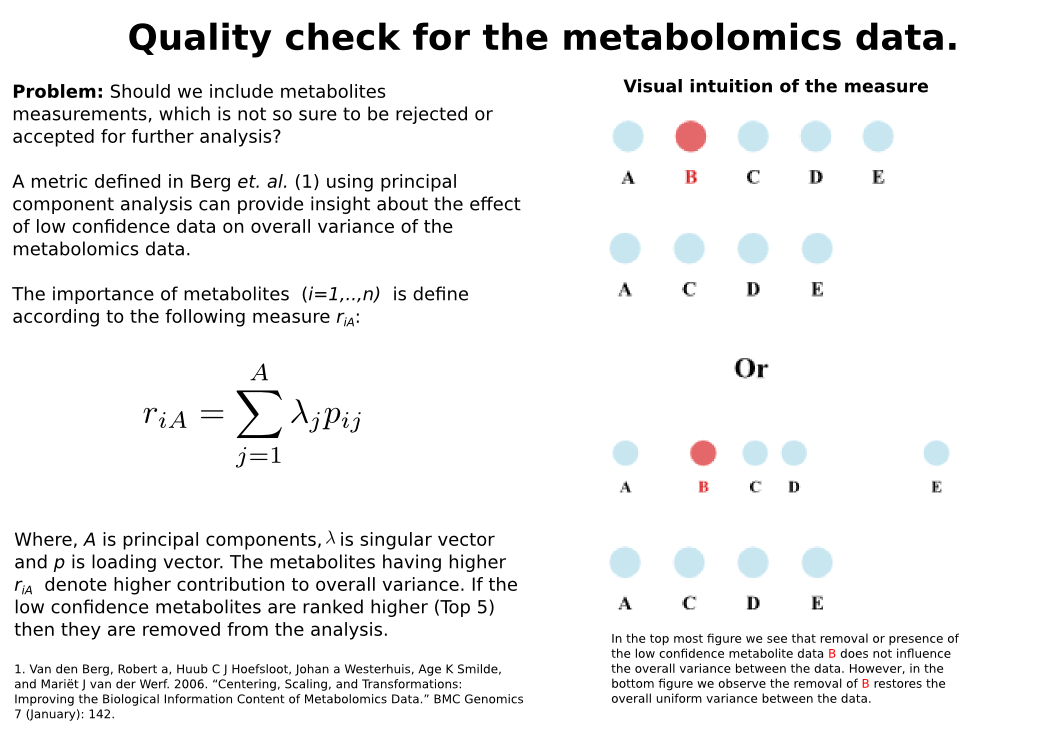
In postdoctoral work, I developed the rigorous procedure for data aggregation (The figure illustrate one example of data quality check.) and built a model based on the constraint-based reconstruction and analysis (COBRA) method. The figure Figure 2 provides the overview of the steps involved in the construction of a model through COBRA method.
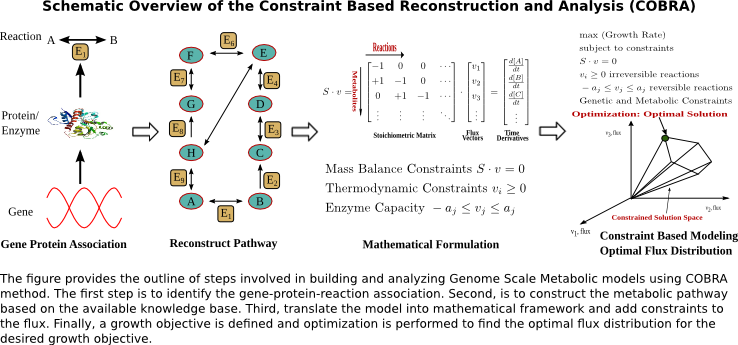
There is growing evidence that the cancer cells metabolism is reprogrammed in many different ways compared to the healthy cell to meet the metabolic needs of cancerous cells. The constraint-based reconstruction and analysis (COBRA) methods integrate the biochemical, genetic, and metabolic knowledge into a mathematical framework that enables the systematic study of the metabolic phenotype of the cells
The crucial step in studying the cancer metabolism through COBRA methods is to obtain a generic GSM model, which can be fine-tuned to integrate gene expression and metabolomics data pertinent to cancer cells. We used modelBorgifier to integrate the three generic mouse Genome-scale model (GSM) into one aggregated mouse GSM model. Next, we computationally integrate the cancer cell-specific gene expression and metabolomics data into the model through iMAT algorithm. The figure Figure 3 provides the overview of methodology used to maintain data quality and integrate diverse data sets into COBRA analysis.
After, constraining the GSM model to tissue-specific expression and metabolomics data, we performed computer simulations to compare simulated model results with the NCI 60 cell lines such that the model reproduces the common metabolic dysregulation found across the cancer cell lines. Next, we performed the flux variability analysis, which showed interesting result about increased activity of Lactate Dehydrogenase enzyme. The computer simulation showed that the Pyruvate Dehydrogenase, which is the entry point for TCA cycle from glycolysis cannot carry all the flux from increased activity of glycolytic enzymes, which leads to flux redirecting towards pyruvate dehydrogenase.
Doctoral Research Work
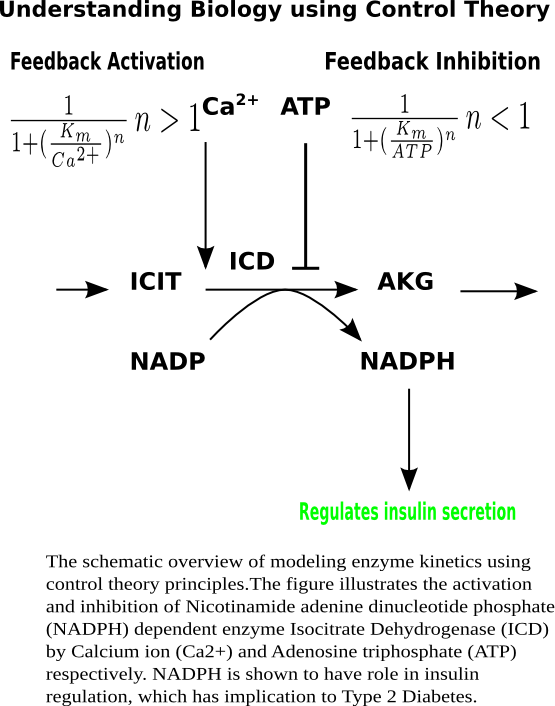
In my doctoral research work, I developed a model for the pyruvate recycling metabolic pathways to identify key regulatory components in the pathway, which influence pyruvate recycling and NADPH. Both, pyruvate recycling and NADPH has been shown to play a critical role in the insulin secretion. The malfunction of the key metabolic pathways such as pyruvate recycling pathway is shown to be correlated with the onset of Type 2 diabetes. Therefore, a better understanding of this pathway can suggest better targets for performing experiments and therapeutic intervention (Figure 4).
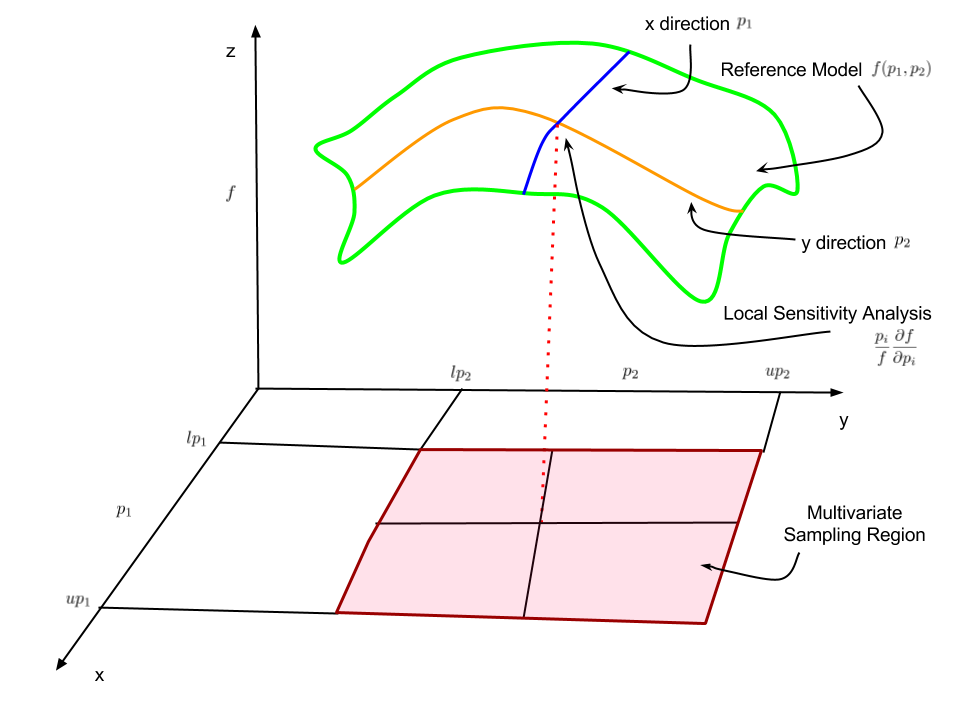
The model, which I developed for the pyruvate recycling pathways, describes the TCA cycle, the pyruvate/malate shuttle, the pyruvate/citrate shuttle, and the pyruvate/isocitrate shuttle. The model consists of 24 states, 31 reaction fluxes, and 129 parameters. The majority of the parameters are pulled from literature, and a subset of 34 parameters was optimized to validate the model against the experimental data of Ronnebaum et.al. (Ronnebaum et al. (2006)). After testing the model against various results related to properties of pyruvate recycling pathways, I analyzed the model using global sensitivity analysis methods of Partial Rank Correlation Coefficient and Extended Fourier Amplitude Sensitivity Test and local sensitivity analysis (Figure 5). The objective of sensitivity analysis was to identify the important control points in the pyruvate recycling pathways. The model predicts that the dicarboxylate carrier (DIC) and pyruvate transporter (PYC) are the most important regulators of pyruvate recycling and NADPH production. Our analysis showed that variation in the pyruvate carboxylase (PC) flux was compensated for by a response in the activity of mitochondrial isocitrate dehydrogenase (ICDm) resulting in the minimal changes in overall pyruvate recycling flux. The model predictions suggest points for further experimental investigation, as well as potential drug targets for the treatment of type 2 diabetes.
Master Research Projects
High-Performance Computing based Monte Carlo Simulation Framework for Spatio-temporal Analysis of Protein Oscillations in E. Coli
Developed a scalable and efficient simulation framework for spatio-temporal Monte Carlo simulations to solve partial differential equations (PDEs) on high-performance computing (HPC) infrastructure provided by BioGrid India (link).
The project emphasized automation, scalability, and reliability throughout the entire simulation lifecycle, incorporating the following key principles:
- Optimized Parallel Scheduling: Efficiently distributed computational tasks across HPC nodes to maximize resource utilization and accelerate simulation time.
- Monitoring, Traceability, and Reproducibility: Ensured all simulations were trackable and reproducible, enabling consistent and dependable outcomes.
- Checkpointing for Fault Tolerance: Implemented checkpointing mechanisms to resume simulations from the last successful state, significantly reducing computational overhead and preventing full restarts in case of interruptions.
Optimizing Conducting Polymers for Next-Generation Solar Energy Harvesting
This project focused on the synthesis and characterization of novel conducting polymers for application in solar cells. We explored various polymerization techniques and doping strategies to optimize conductivity and bandgap alignment, enhancing light absorption and charge transport.
We successfully fabricated polymer-based solar cells and evaluated their power conversion efficiency and stability. The research demonstrated the potential of these cost-effective and flexible materials for efficient solar energy harvesting, contributing to the advancement of sustainable energy solutions.
Summer Internship Project: Temperature and Pressure-Based Humidity Prediction with Carbon Hygristor Sensors
While working as a Summer Research Assistant at the Indian Meteorological Department, New Delhi, India, under the supervision of Dr. K. C. Saikrishnan, I developed a multivariate linear regression model to analyze humidity sensor (Hygristor) data under controlled laboratory conditions using MATLAB Curve Fitting Toolbox.
Using this regression model, we examined the impact of temperature and pressure on the sensor’s humidity readings. Our analysis revealed that:
- At low temperature and pressure, the sensor readings were more influenced by pressure.
- At high temperature and pressure, temperature became the dominant factor.
- Under standard room conditions, the sensor readings remained unaffected by temperature or pressure.
This study provided valuable insights into the sensor’s behavior under varying environmental conditions, contributing to improved calibration and accuracy in humidity measurement.